
Overhead Press Form: Stop Arching Your Back and Pressing Around Your Head
2 min read
The standing overhead press builds strong shoulders and a strong midline — as long as the midline stays tight. Lean back too far and it turns into a standing incline press, with your lower back taking the strain.
Set up tight
- Grip just outside shoulder width, with the bar resting on your front delts and your wrists stacked over your elbows.
- Squeeze your glutes and brace your abs hard before you press — that's what stops the lower-back arch.
Press the right path
Press up and slightly back, moving your head back out of the way. Once the bar passes your forehead, push your head “through” so you finish with the bar stacked over your shoulders and mid-foot. Shrug up at the top to lock out strong and stable.
Why people over-arch
Usually it's a weak brace, a weight that's too heavy, or limited shoulder mobility forcing you to lean back to get the bar overhead. A small lean is normal; a big backbend is the thing to fix.
Cues and drills
- Cues: “ribs down”, “squeeze your glutes”, and “head through” at the top.
- Half-kneeling single-arm presses — it's hard to arch from that position.
- Tempo presses and lighter loads to rebuild the brace before adding weight.
Check it on video
FormLens asks for the press to be filmed from the front, so both elbows stay in view (how to film your lifts). It checks your elbow lockout on every filmed rep — 165° or more at the top — and measures how far your hips drift off the line from your shoulders to your ankles. It reports that number but doesn't flag it as a fault yet.
Layback itself is a side-on fault, and front-on isn't the angle to judge it. If arching is what you're fixing, film one extra set from the side and check your ribs and lower back yourself. Lockout and consistency feed your form score.
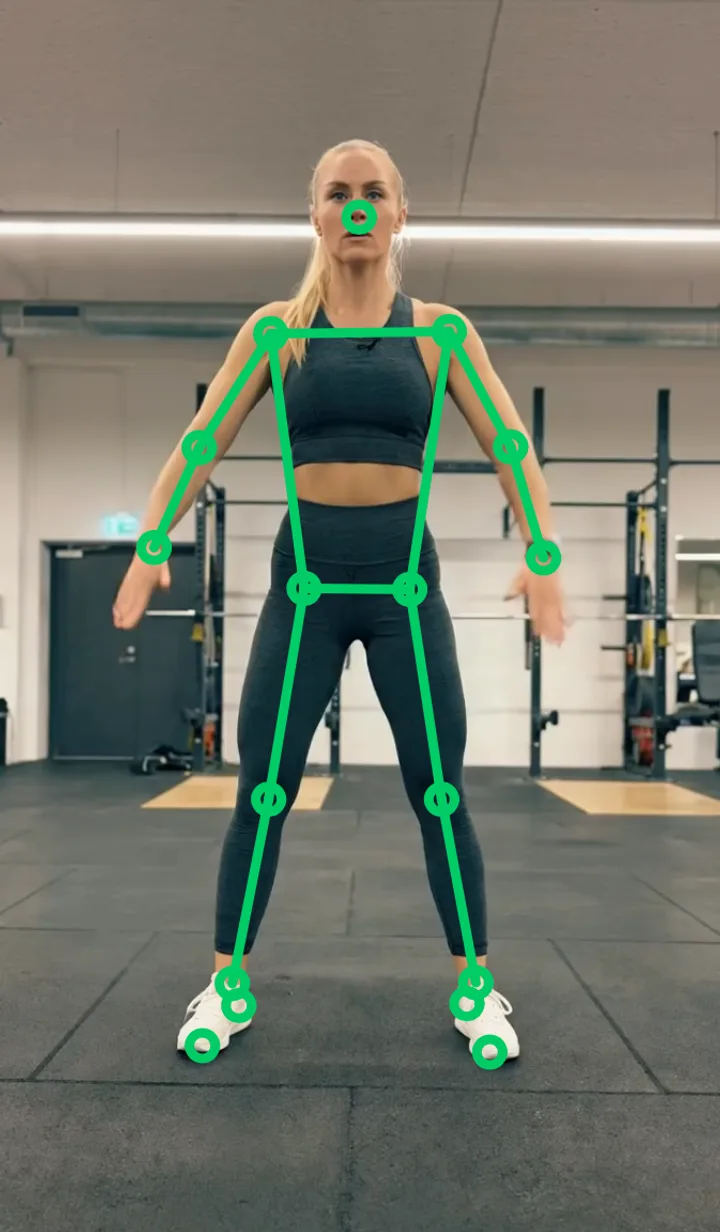
How FormLens measures this
Overhead press · Filmed front-on, phone at hip height
- Lockout
- Your elbow angle at the top of each rep. 165° or more counts as locked out.
- Hip drift
- How far your hips move off the line from your shoulders to your ankles — reported as a number, not flagged.
- Consistency and tempo
- How closely your reps match each other, and how steady your rhythm is, on multi-rep sets.
Checking layback: front-on isn't the angle for it — film an extra side-on set and watch your ribs and lower back.
Not auto-flagged yet: layback. Every measurement is an estimate from a single camera, so setup matters — see the camera setup.
Educational only — not medical advice. FormLens is a training aid, not a medical device; measurements are estimates from a single camera. If something hurts, see a physio or doctor. Terms of Use
First published · Last updated · By FormLens